How to invoice in Slovakia
The paperwork here is not hard, it is just entirely in Slovak — and the first invoice arrives before anyone has explained the words on it. This page walks the whole path: getting the right to invoice at all, the three numbers everyone confuses, and the two questions every foreigner asks first.
Updated:
First you need the right to invoice
An invoice is issued by a business, not by a person. In practice that means a živnosť (a sole trader's trade licence) or an s.r.o. — the živnosť is what most people start with.
- Who can register
- Citizens of the EU, the EEA and OECD countries register on the same terms as a Slovak. Everyone else needs a residence permit, a criminal-record extract from their home country with an apostille, and a certified translation of it.
- Where
- At the Jednotné kontaktné miesto (the single point of contact) inside a district office. It is one visit; the trade licence itself is usually issued within a few days.
- What you walk out with
- The trade licence, an IČO, and registration for income tax — the office does the tax part for you and the DIČ arrives without a separate application.
The three numbers people confuse
- IČO
- Your business identifier. Eight digits, public, on every invoice you issue.
- DIČ
- Your tax number for income tax. You get it with the trade licence.
- IČ DPH
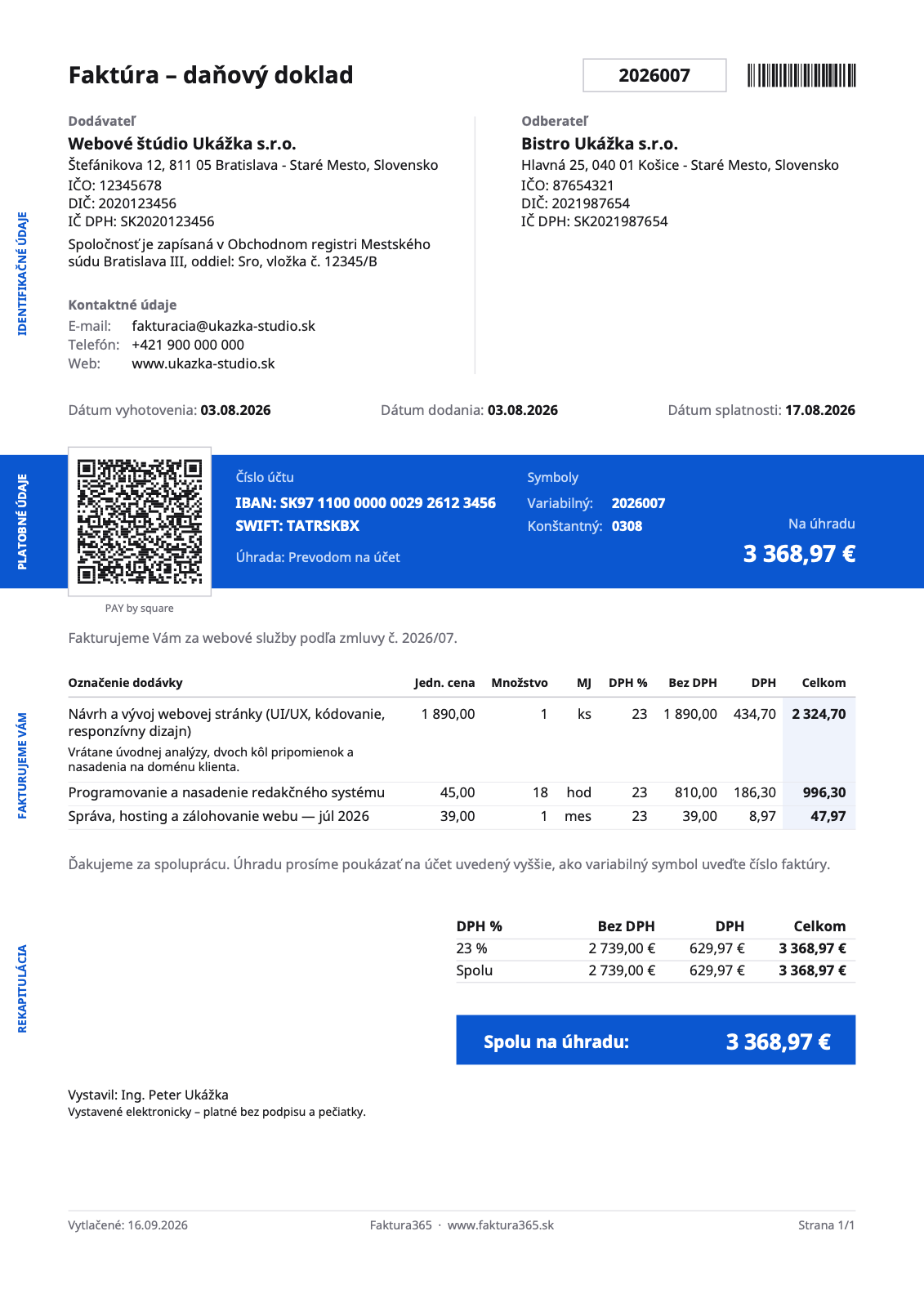
- The VAT number. You only have one if you are registered for VAT — most beginners are not, and then this field simply does not exist on your invoice.
Can I write the invoice in English?
Yes. Slovak law requires accounting to be kept in the state language, and a document in another language is acceptable as long as its content is comprehensible. The practical catch is small but real: during an inspection the tax office may ask you for a Slovak translation of it.
That is why the invoice language and the interface language are separate here — you can work in your own language and still print a particular invoice in Slovak when that is the calmer option.
You almost certainly start without VAT
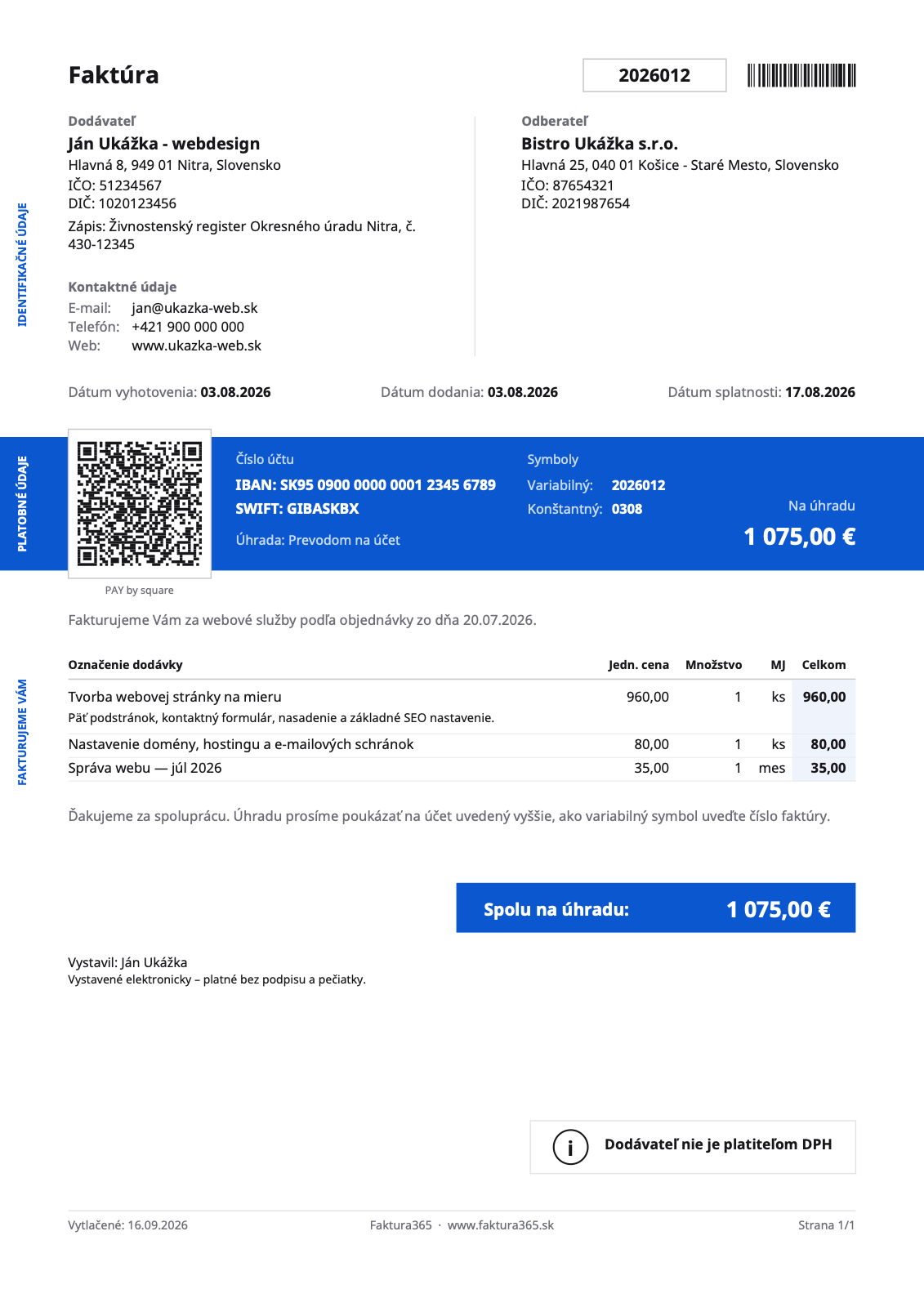
A new živnosť is not a VAT payer. You invoice a single amount, with no tax base and no VAT line, until your turnover crosses the threshold — and nobody warns you when it does, so the running total is worth watching.
Clients in another EU country
Supplying a service to a business elsewhere in the EU normally means registering under §7a of the VAT Act first — and so does BUYING one, which is where advertising, hosting and software subscriptions catch people out. That registration does not turn you into a VAT payer at home; it is a separate status with its own duties.
Frequently asked questions
Do I have to charge VAT on my very first invoice?
No. You start as a non-payer and invoice without VAT. It becomes compulsory only once your turnover crosses the statutory threshold, or if you register voluntarily.
My client is a company in Germany. What changes?
For a service to a business in another EU country you generally register under §7a first, and the invoice carries no Slovak VAT — the customer accounts for the tax in their country. You still are not a VAT payer at home.
Is anything else needed after the trade licence?
The trade office handles the income-tax registration for you. Your health insurance company, however, has to be told separately that you have started a business — that notification is on you.
Does my invoice need a signature or a stamp?
No. Neither is among the mandatory details, and an invoice without them is perfectly valid — a habit left over from paper, not a legal requirement.
Write your first invoice in your own language
Faktura365 fills in the Slovak details from the registers, keeps the numbering continuous, and speaks twelve languages while the document stays exactly as Slovak rules require.
Open the appSources
This information is general in nature and does not replace tax, legal or immigration advice. Rules and thresholds change — check your own situation with an accountant.